
Science & tech
Chrono log
The central information resource on scientific and technological progress and digital transformation. Published on the basis of a distributed computing data processing cluster. Continuous information support for key discoveries, inventions, and promising developments of our time.
The Environmental Cost of Google’s Neural Networks
The era of Large Language Models has evolved beyond a mere challenge of algorithms and datasets; it has become a crisis of physical resources. Google’s latest environmental report reveals an unprecedented surge in power consumption—a spike that casts serious doubt on the feasibility of the decade's climate targets. The scale of these requirements is now comparable to the total energy budgets of entire nations. Within this tension between rapid technological acceleration and environmental stewardship, the true cost of modern artificial intelligence is becoming starkly apparent.
Date4 Jul 2026
Read4 min
The Environmental Cost of Google’s Neural Networks
The Collapse of Tokenomics and the Battle for Data
The contemporary generative AI market is grappling with a profound crisis of confidence between enterprise clients and the tech giants. While the industry was acclimating to token-based pricing models, a fundamental conflict emerged over data privacy and the ownership of intellectual capital. Palantir CEO Alex Karp has openly accused industry leaders of covertly harvesting unique client business processes to train their proprietary models. This clash signals a pivotal shift: moving away from unbridled enthusiasm for neural networks toward a rigorous struggle for digital sovereignty.

Date4 Jul 2026
Read3 min
CalyxOS vs. Google’s Closed Infrastructure
In the realm of privacy-centric software, trust is predicated on absolute transparency and the elimination of single points of failure. When one of the founders of CalyxOS departed the project, the team was confronted with a fundamental crisis in supply chain security. The subsequent rollout of version 7.2.2.0 was more than a mere technical update; it represented a strategic overhaul of the system's defensive architecture. Now, the OS anchors its privacy guarantees in hardware-backed cryptography—a critical pivot as the Android ecosystem becomes increasingly restrictive.
AuthorAlex J.
Date4 Jul 2026
Read3 min
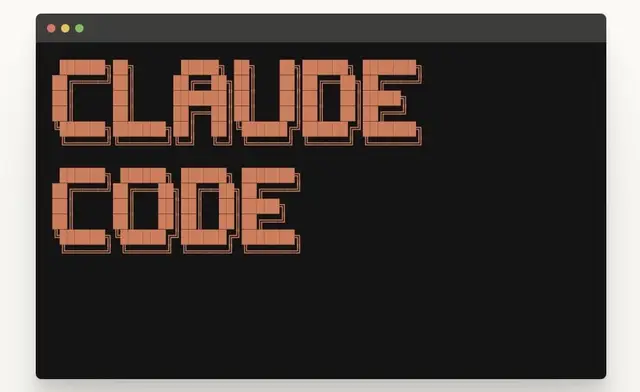
A Visual Approach to LLM Cost Optimization
The operational overhead of advanced AI agents is increasingly becoming a primary bottleneck for scaling development automation. Traditional token-based pricing creates an inflexible correlation between context volume and financial expenditure, forcing developers to navigate a constant trade-off between analytical depth and budgetary constraints. Yet, the emergence of visual prompt compression tools offers an unexpected workaround. By transforming textual data into images, it is now possible to radically reduce request costs without significantly compromising the quality of the output.
AuthorAlex J.
Date4 Jul 2026
Read3 min
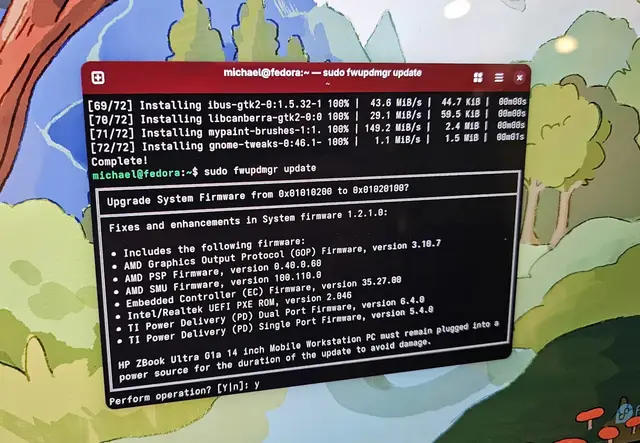
Standardizing Microcode Updates via fwupd
For years, device microcode updates represented one of the most significant pain points for Linux users, typically necessitating either proprietary software or precarious manual interventions. The introduction of the Linux Vendor Firmware Service (LVFS) and the fwupd toolset fundamentally shifted this paradigm, establishing a centralized gateway for firmware updates from hundreds of vendors. With the release of version 2.1.6, the ecosystem continues to refine its stability mechanisms and expand its hardware compatibility list. This evolution is transforming hardware maintenance from a daunting technical chore into a seamless, invisible background process.
Date4 Jul 2026
Read3 min
The Evolution of the Microsoft Edge Ecosystem
Modern web browsers have evolved far beyond simple page-viewing tools, transforming into comprehensive operating environments for productivity and communication. Microsoft Edge is driving this evolution forward, implementing fundamental shifts in synchronization mechanisms and digital identity management. The rollout of version 150 signals a pivot toward a more agile update cadence and a strategic rethink of the user interface. Rather than mere bug fixes, this release establishes the architectural foundation for a new global trajectory for the platform's development.
Date4 Jul 2026
Read3 min
Alex J.
Alex J.
JobAnalyst
CityDubai
Alfred Moss
Alfred Moss
JobEconomist
CityTel Aviv
Julia Kvitka
Julia Kvitka
JobQA engineer
CityWarsaw
Maxim Belkin
Maxim Belkin
JobWeb developer
CityWarsaw
Michael Bronstein
Michael Bronstein
JobTechnical writer
CityHerzliya
Tala Milonas
Tala Milonas
JobContent manager
CityAthens
Tala knows • The use of materials from this website is permitted solely on the condition that an active, direct, and search-engine-friendly hyperlink to the original source is included. The link must be clickable and placed directly within the body of the publication — either before or after the borrowed text. Any copying, reproduction, or citation of the content without complying with this condition will be considered a violation of copyright.
© 2007 – 2026 Tala Knows LLC